
Alamosa County Multi-Day Arrest Log
Alamosa County publishes no official 72-hour or weekly booking list online. The newspaper is the closest thing. The Valley Courier runs a recurring Alamosa Sheriff Report column and a separate Alamosa Police Report column. Entries name selected people, with ages and charge descriptions. No booking numbers, bond fields, or custody status appear. The columns are selective, not a jail roster.
An article's reporting period often differs from its publication date, which trips up careless readers. A 6:00 a.m. upload stamp belongs to the publisher, not the jail. Keep both dates. For a multi-day arrest search in Alamosa County, work backward through dated reports, then ask the record custodian if your event is absent.
Read Alamosa County Blotter Reports
Each column is a selective secondary source. Neither the sheriff's column nor the police column holds the official booking record. Compare entries across several days only after checking the byline, publication date, named reporting dates, and agency label. The two columns come from different agencies.
- Choose the sheriff report for ACSO activity or the police report for Alamosa Police Department activity. Search both if the arresting agency is unclear.
- Record the article date, upload time, and period described. Do not assign the upload date to every event listed.
- Read charge or citation text as an charge. Note the city or location, but do not infer the detention facility from geography alone.
- Call Alamosa County Jail at 719-589-6608 for current county custody. News text cannot confirm that the person remains held.
- Request the booking sheet from the county or the incident record from APD when documentary proof is needed.
- Check the correct court for the later filing and disposition.
Need something from today? Use the Daily Arrest Report workflow instead of waiting on a newspaper column. Columns lag behind. For the wider official source map, the Alamosa County recent arrests hub pulls it together.
Alamosa Arrest-Log Entry Fields
The Valley Courier's format is narrow, not a jail intake schema. This table separates what the newspaper prints from what only an official check can confirm. Coverage shifts from article to article. A blank field proves nothing about the agency.
| Item | Meaning and limit |
|---|---|
| Name and age | Published identity details in selected examples; verify spelling with the custodian. |
| City or location | Reported place information, not proof of present jail location. |
| Citation or charge | Initial report language, not a conviction or final filed charge. |
| Report date | The article or column date, which may differ from the event date. |
| Booking number | Not verified as a routine newspaper field; ask the jail custodian. |
| Bond and custody | Not established by the recurring report examples; call the jail. |
| Photograph | No routine gallery appears in the report examples. |
Some individual stories run an agency-supplied booking image. One high-speed-chase article labels its picture an ASO booking photo. That was an editorial choice. It does not mean weekly arrests in Alamosa County come with photos online.
Alamosa Sheriff and Police Columns
The Courier keeps sheriff and police reports separate. That split points to the likely record owner. It also keeps a city police citation from being mislabeled as a sheriff booking. Names, ages, places, and alleged violations show up in the columns. The scope stays selective. The Valley Courier home page offers context, but no column can show everyone arrested in Alamosa County that week.
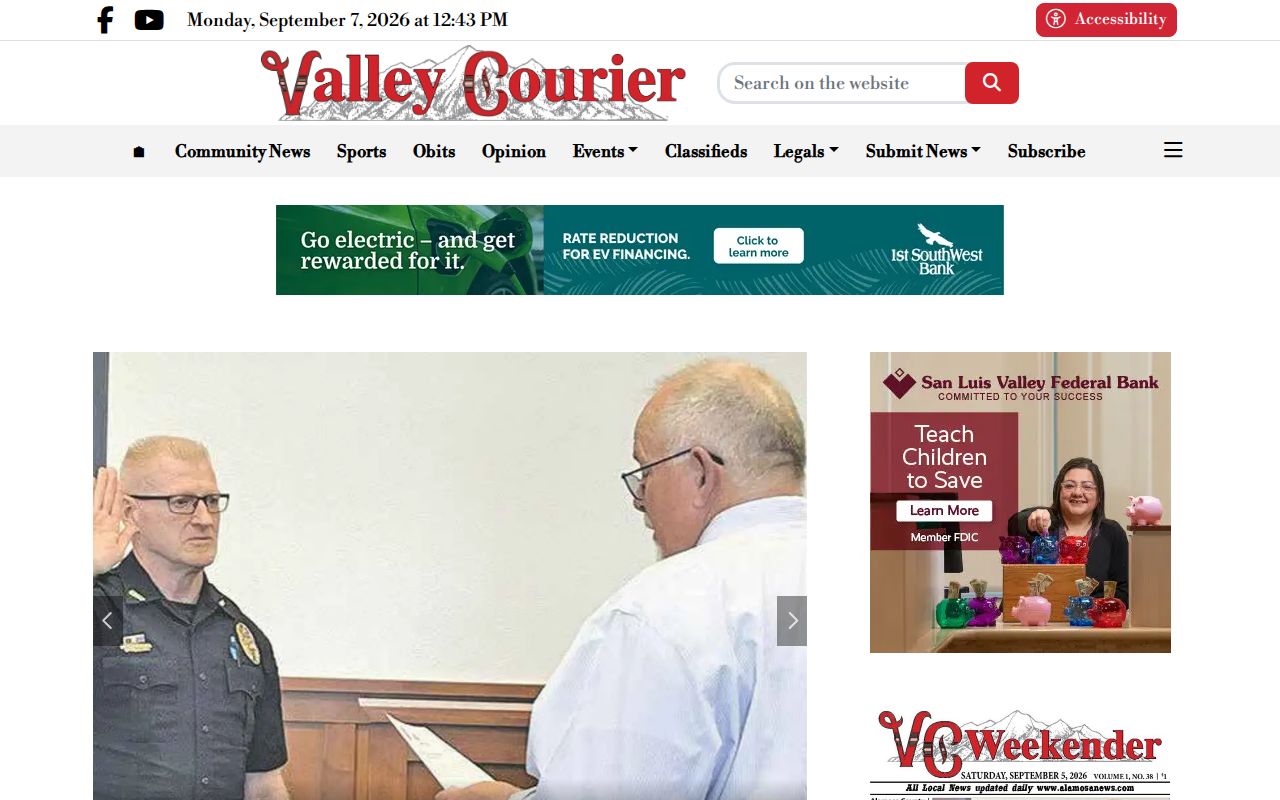
The news site is a secondary channel, not a custody database. Alamosa County keeps no jail data there. The sample Alamosa Sheriff Report shows the format of one recurring column. Read it as journalism.
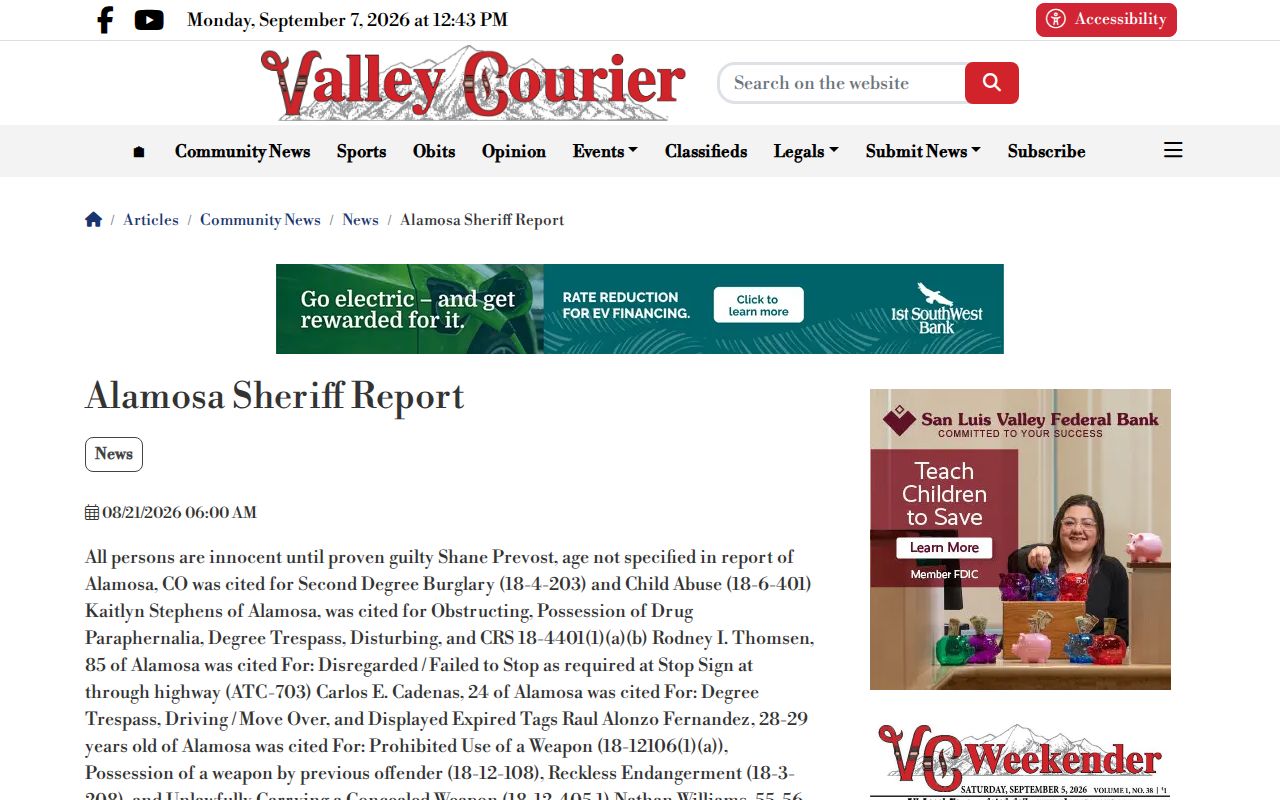
One sample proves little. Pair the article with its publication date and the period it names. It is not a live inmate list. Treat it as one column from one stretch of days.
Alamosa Arrest Archives and Retention
Alamosa County posts no jail retention schedule online. The newspaper keeps report articles and PDF editions, but promises no archive depth. A missing page tells you little. The agency record may still exist. Ask the Sheriff's Office custodian directly. The record may exist, have moved, been destroyed under an adopted schedule, or be restricted.
The Alamosa County Archive Center lets you filter by category and date range, useful once a county series has moved there. Colorado State Archives runs its own advanced search for statewide historical collections. No Alamosa sheriff booking-photo collection appears there. The county remains the first archive handoff, and the official County Archive Center search shows the date-and-category controls for transferred material.
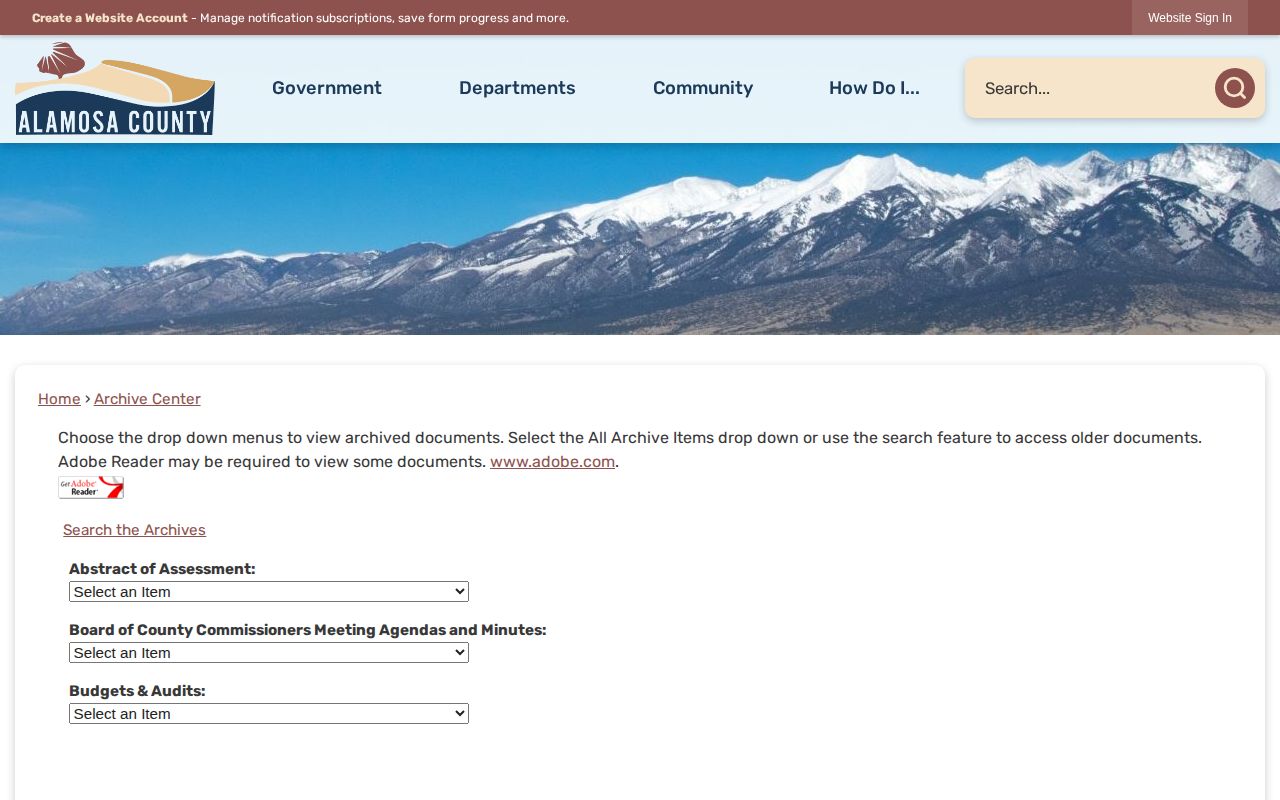
The archive is a records path. It is not proof a booking log series was transferred. It shows where records live. Nothing more.
Note: Colorado's municipal retention schedule is context for APD only if adopted; it does not prove the county jail's schedule.
Alamosa Arrest Trends Versus Logs
A trend chart and a weekly arrest log answer two different questions. Counts can rise or fall over time. They never name a booking. A chart total should never be turned into a list of who entered the Alamosa County jail.
For trend numbers, the Colorado Arrests and Offenses Tool is the official source for the series and its definitions. Alamosa Citizen's local analysis adds useful context. It is still reporting, not custody evidence. Before quoting any figure, check the geography, offense category, measure, and date span you selected.
Why do the numbers disagree? One source counts offenses. Another reports citations, while the jail records bookings. Those units measure different events, so they are not interchangeable.
A careful comparison keeps the state tool's measure intact. An offense count is not an arrest count. An arrest count is not a booking count either. Reporting may reflect revised submissions or a single agency rather than every agency working in Alamosa County, which makes statistics good for context but useless for confirming a named person's arrest that week.
Alamosa Enforcement Stories Aren't Logs
Alamosa police reports and speed-enforcement stories describe citations, policy, and targeted campaigns. None of that becomes a booking list. The department offers no DUI-checkpoint or enforcement-blitz booking feed. An announced crackdown also proves nothing about whether a named person was arrested or booked.
Regional stories need the same caution. A multi-agency operation involving the U.S. Marshals Service can report arrests made in Alamosa County. It may not say who entered the jail. Verify the holding agency through the right official channel instead of assuming custody from the article's location.
Alamosa Arrest Reports Need Dispositions
An arrest report is only the first page of a case. Charges get reduced, amended, or dropped. Pleas and sentences come later, in court. For those outcomes, use the Alamosa County Combined Court or the Alamosa Municipal Court, depending on the agency and case type.
Not every record is open. Sealed files, juvenile cases, victim-protected details, and suppressed information sit outside the normal public route. An old clipping cannot rebuild a restricted record. Ask the court or the custodian that holds the file about its current legal status.
Fixing a dated report takes two requests. Start with the publisher for the story. Then ask the agency for the source record. Add the date, the disputed detail, and any court order backing the change. A news site can correct its page while the agency file stays the same, and a cached article may lag behind both, so keep each request with the organization that controls that copy.